
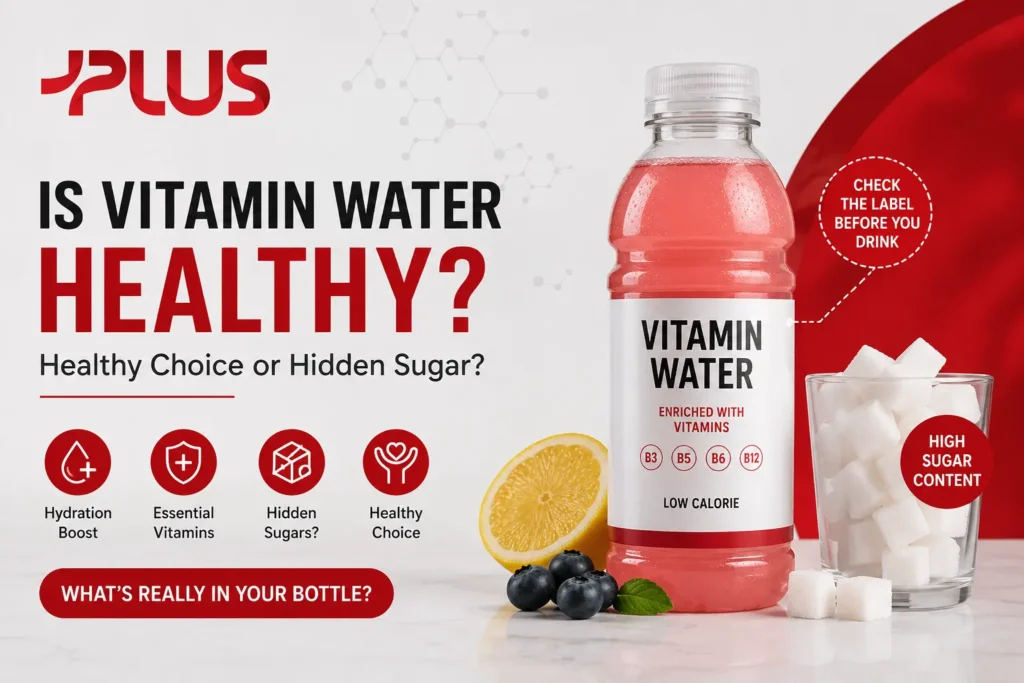
Vitamin water is not as healthy as it sounds. While it does contain real vitamins and some electrolytes, most standard vitamin water products also carry 25 to 32 grams of added sugar per bottle—nearly as much as a can of soda. For most people drinking it as a daily hydration choice, the sugar outweighs the nutritional benefit. That said, context matters, and the answer changes depending on which product you choose, how often you drink it, and what your health goals are. If you’re trying to support your daily multivitamin needs, relying on balanced nutrition and targeted supplements is often a smarter long-term strategy than sugary vitamin drinks.
Most vitamin water products including the popular Glacéau Vitaminwater range by Coca-Cola contain the following core ingredients:
The vitamins are real. The electrolytes are real. The problem is the sugar that comes packaged alongside them.
When you drink vitamin water, here is what actually happens:
The vitamins absorb — B vitamins enter the bloodstream and support energy metabolism and nerve function. Vitamin C acts as an antioxidant and supports immune defence.
The sugar spikes blood glucose — Crystalline fructose and cane sugar are absorbed rapidly, causing a blood sugar rise similar to drinking a soft drink.
Mild hydration occurs — Because the base is water, it does contribute to fluid intake. But the sugar content reduces its efficiency as a pure hydrating fluid.
Electrolytes help slightly — The small amounts of potassium and sodium support fluid balance, though the quantities are far lower than dedicated electrolyte drinks.
In short, vitamin water does deliver some genuine nutrients but the sugar is an unavoidable trade-off with most standard formulas.
For everyday hydration, regular water is superior. Vitamin water contributes to your fluid intake so yes, it does count toward your daily water intake but the added sugar makes it a poor replacement for plain water as your primary drink.
For mild dehydration, vitamin water provides marginal benefit. It replaces some fluids and a small amount of electrolytes. However, if you are significantly dehydrated from illness, intense exercise, or heat an oral rehydration solution (ORS) or a proper electrolyte drink is far more effective and does not come with 30 grams of sugar.
Does vitamin water count as water intake?
Technically yes it is mostly water and does contribute to daily fluid goals. But regularly substituting it for plain water adds unnecessary sugar to your diet over time.
Only marginally. A standard bottle of Vitaminwater contains roughly 150mg of potassium about 3% of your daily need. Compare this to coconut water (around 600mg per cup) or a proper electrolyte drink. The electrolyte content in vitamin water is too low to meaningfully address electrolyte imbalance after intense exercise or illness. It is not a sports drink replacement.
This is the gap all three competitors underemphasise. A single 500ml bottle of standard Vitaminwater contains 32 grams of sugar that is 8 teaspoons. The World Health Organization recommends limiting free sugar intake to 25 grams per day for adults. One bottle already exceeds that.
Regular high sugar intake is linked to:
The branding and vitamin fortification create a “health halo” people assume it is healthy because it contains vitamins, without checking the sugar content. This is the core hidden sugar problem with vitamin water.
Despite the sugar concern, vitamin water does offer real benefits in specific situations:
Vitamin Water vs. Regular Water
| Factor | Vitamin Water | Regular Water |
| Hydration efficiency | Moderate | Best |
| Sugar content | 25–32g per bottle | Zero |
| Vitamins | Yes (B, C, sometimes A/E) | None |
| Electrolytes | Small amounts | None |
| Calories | 100–130 per bottle | Zero |
| Suitable daily | No, occasional only | Yes, unlimited |
| Cost | Higher | Near zero |
Plain water remains the gold standard for daily hydration. Vitamin water is an occasional supplement, not a replacement.
Vitaminwater Zero replaces sugar with stevia and erythritol, bringing calories and sugar to near zero. This makes it a significantly better option than the standard version for people watching sugar intake. It still delivers the same vitamin and electrolyte content.
However, some people are sensitive to sugar alcohols like erythritol, which can cause digestive discomfort in larger amounts. For most people, Vitaminwater Zero is the smarter choice but plain water is still better for pure hydration.
Healthier Alternatives
Frequently Asked Questions
Is zero vitamin water good for you?
Yes, it delivers real vitamins without the added sugar, making it a much better option than standard vitamin water for everyday use.
Is Glacéau vitamin water good for you?
It contains genuine vitamins and electrolytes, but the high sugar content in standard variants makes it a poor daily health drink, occasional consumption is fine.
Is acai blueberry pomegranate vitamin water good for you?
The fruit names are mostly for flavour the formula still carries significant added sugar, so treat it as an occasional flavoured drink rather than a health product.
Is zero sugar vitamin water good for you when sick?
It is a decent option when sick as it provides fluids and some vitamins without sugar, but an oral rehydration solution works better for genuine dehydration.
Is vitamin water good for diabetics?
Standard vitamin water is not suitable for diabetics due to its high sugar content. The zero-sugar version is a safer choice, but should still be consumed in moderation.
Is it okay to replace water with vitamin water?
No doing so means consuming excessive sugar daily. Vitamin water can complement plain water occasionally but should never replace it as your primary hydration source.
Is vitamin water 100% water?
No while water is the main ingredient, it also contains added sugars, vitamins, electrolytes, and natural flavours, making it a fortified flavoured beverage, not pure water.
Vitamin water sits in a grey area it is not as healthy as its name suggests, but it is not as harmful as a soft drink when consumed occasionally. The core issue is hidden sugar: standard vitamin water contains up to 32 grams per bottle, exceeding recommended daily limits in a single drink. The vitamins and electrolytes are real but modest. If you choose vitamin water, opt for the zero-sugar version and treat it as an occasional drink not a daily habit. For hydration, nothing replaces plain water. For genuine dehydration or illness recovery, an ORS works far better. Vitamin water is a middle-ground product that is most useful when transitioning away from soda or when plain water feels unappealing.
Whatsapp Us